Google Bills Calendar
Problem
People sign up for recurring expenses once, then stop seeing them. Google's brief to us: what could be added to Google Pay to help 18 to 25 year-olds who are financially coping or vulnerable manage their money more effectively?
Solution
A bills calendar that shows users when and where their money is going. Shared bills, bill reminders, progress, and total spend help users challenge and justify their recurring expenses and spending habits.
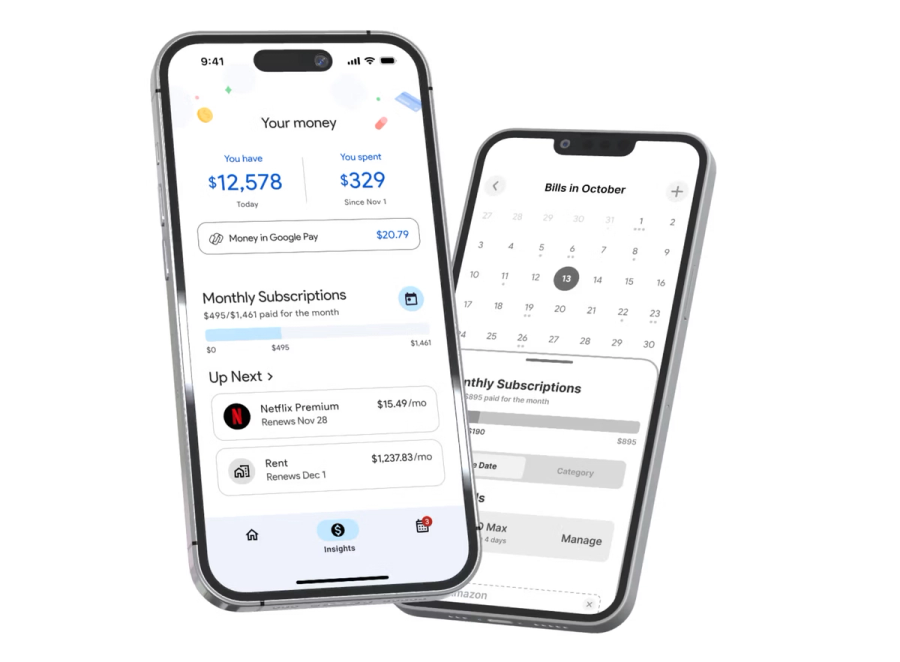
Google Bills Calendar
Fall 2021 · 10 Weeks
SCADpro Collaboration
It was so fun to work on the Google Pay team! The designers from Google were very helpful and pushed our thinking, but also were impressed with the quality of work we provided.
Google Bills Calendar
Fall 2021 · 10 Weeks
SCADpro Collaboration
It was so fun to work on the Google Pay team! The designers from Google were very helpful and pushed our thinking, but also were impressed with the quality of work we provided. I had a blast leading the team and interfacing with the Google team directly. I learned about how to work with difficult direct reports and how to inspire a team around a common goal. I'm really proud of the features we came up with and I'm very sad Google shut Google Pay down.
Problem
People sign up for recurring expenses once, then stop seeing them. Google's brief to us: what could be added to Google Pay to help 18 to 25 year-olds who are financially coping or vulnerable manage their money more effectively?
Solution
A bills calendar that shows users when and where their money is going. Shared bills, bill reminders, progress, and total spend help users challenge and justify their recurring expenses and spending habits.
Project Manager
I led the project by assigning work, checking in with teammates, and determining the direction of the project.
UX Designer
I designed the experience of using the product based on research, testing, and intuition.
User Tester
I designed and executed user tests for rapid feedback and iteration on hypotheses.
I led the full fourteen-person student team and directed our four-person Bills Calendar sub-team. I set direction across the project, ran the check-ins with Google, and drove the Bills Calendar from research through two rounds of usability testing to the final screens and flows.
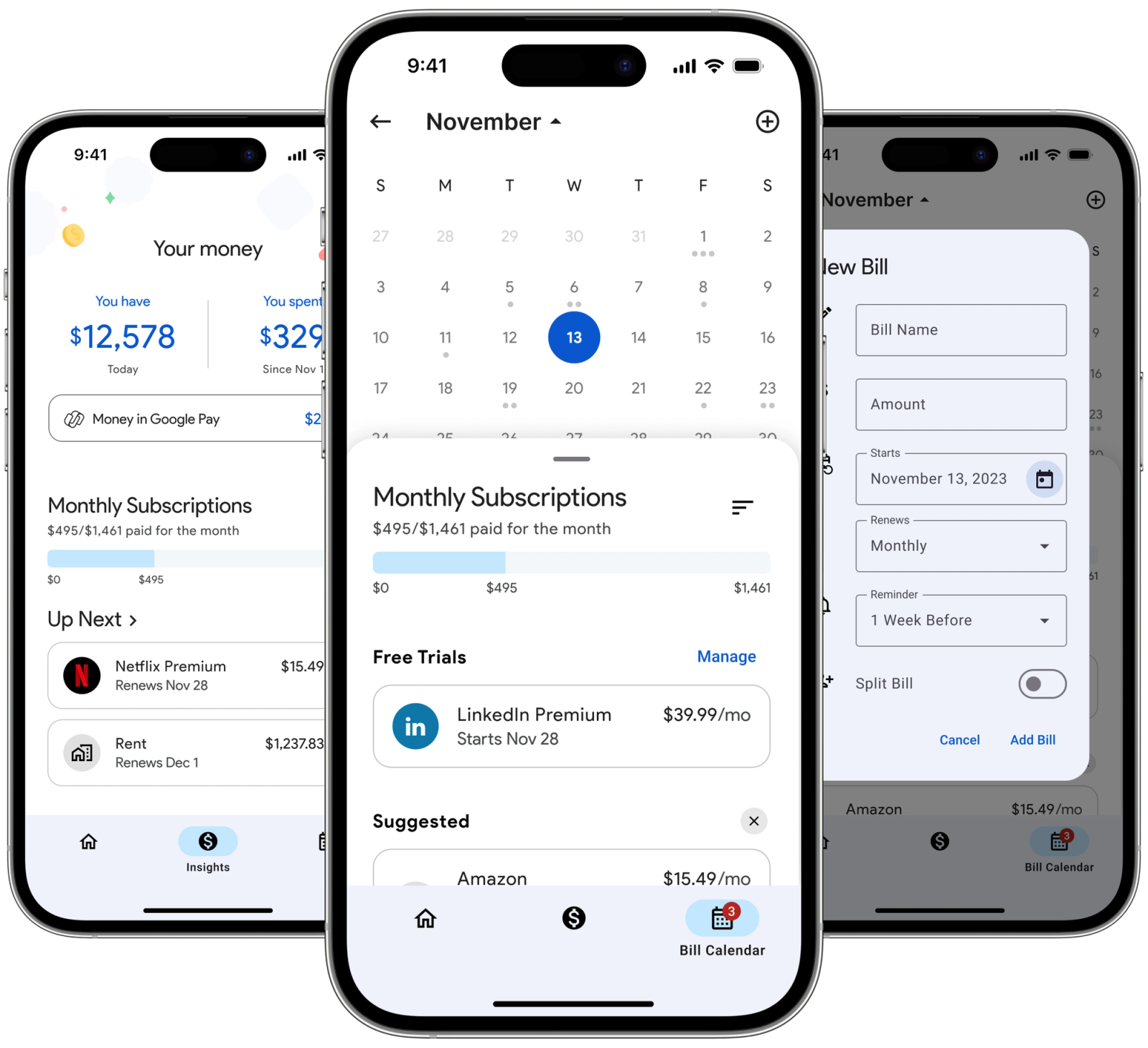
Bills Overview
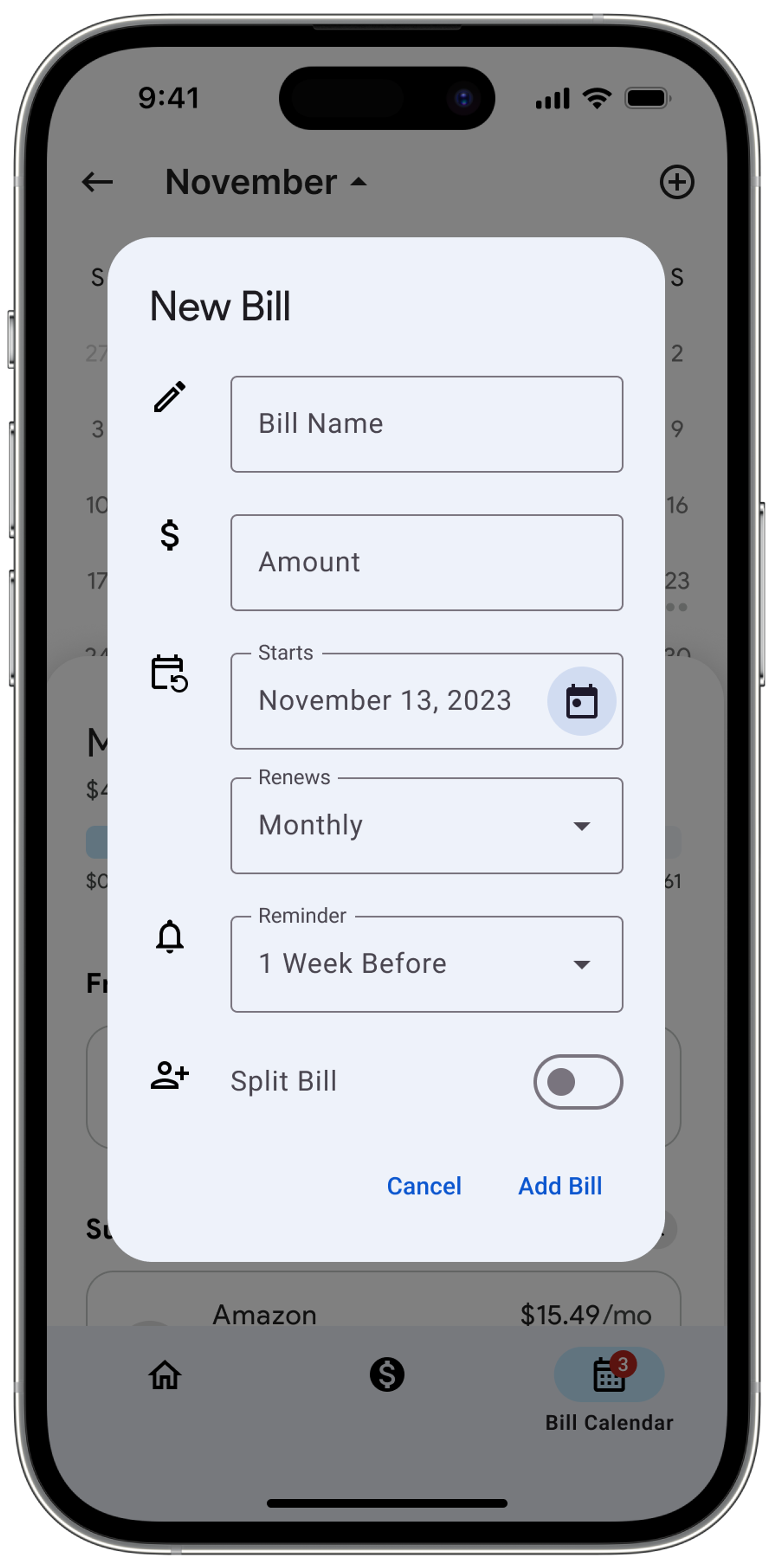
A calendar was already how people thought about time and money, so every recurring expense sits on one. Due dates and amounts read at a glance, and the month's committed total stays in view, so a spending decision happens with the rest of the month visible. Adding and splitting a bill works like sharing a calendar event, a pattern people already know.
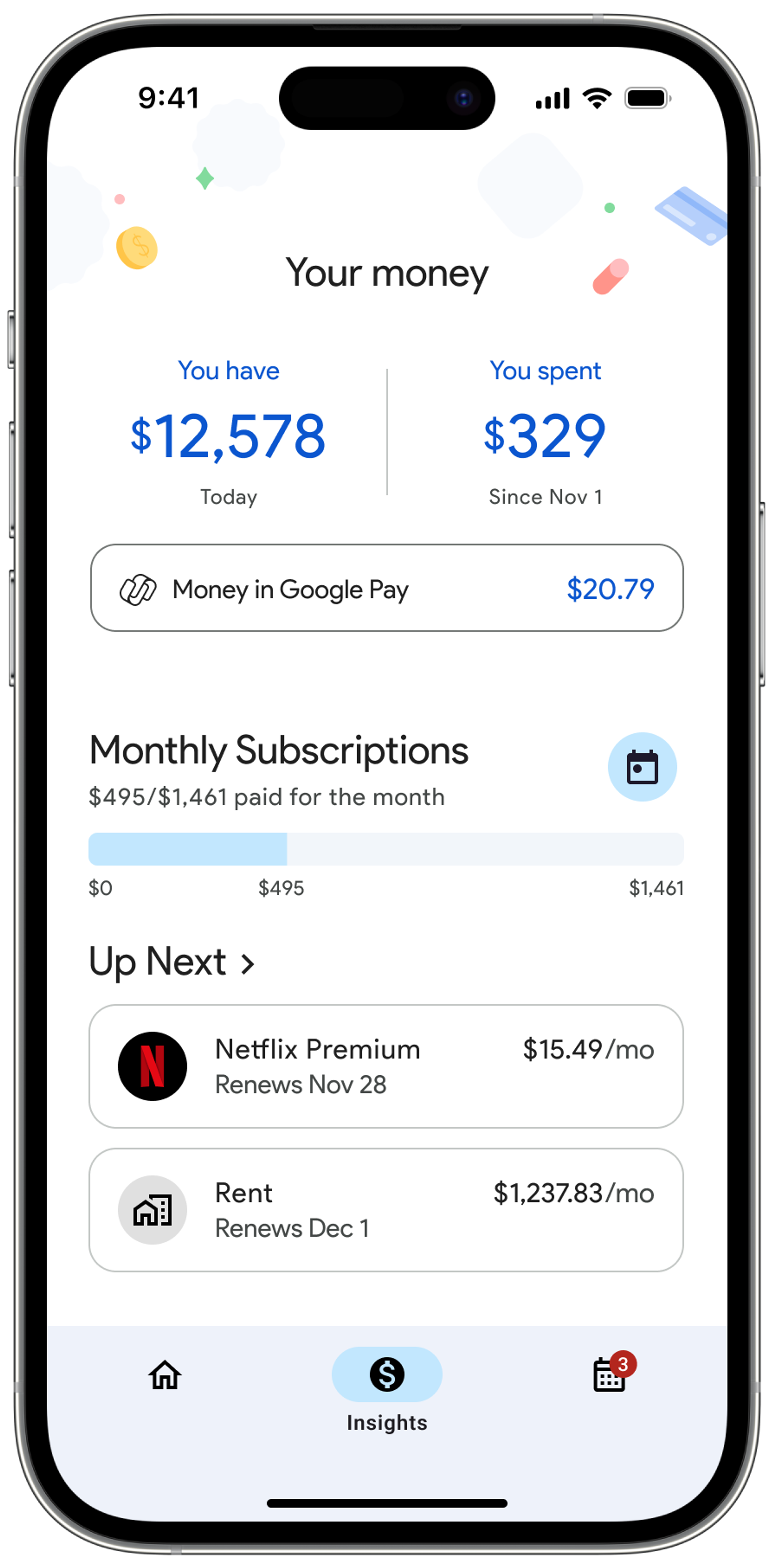
Bills Overview, a monthly calendar with a due-date timeline and running total
Upcoming Expenses
The calendar answers when. This view answers what kind. Bills group by category so streaming, utilities, and the rest each carry their own total, which is what people asked for once a due-date list alone stopped telling them where the money was going. Free trials get their own group because they convert silently. Variable bills show a predicted amount from historical averages or the biller, since a blank number is harder to plan around than an estimate.
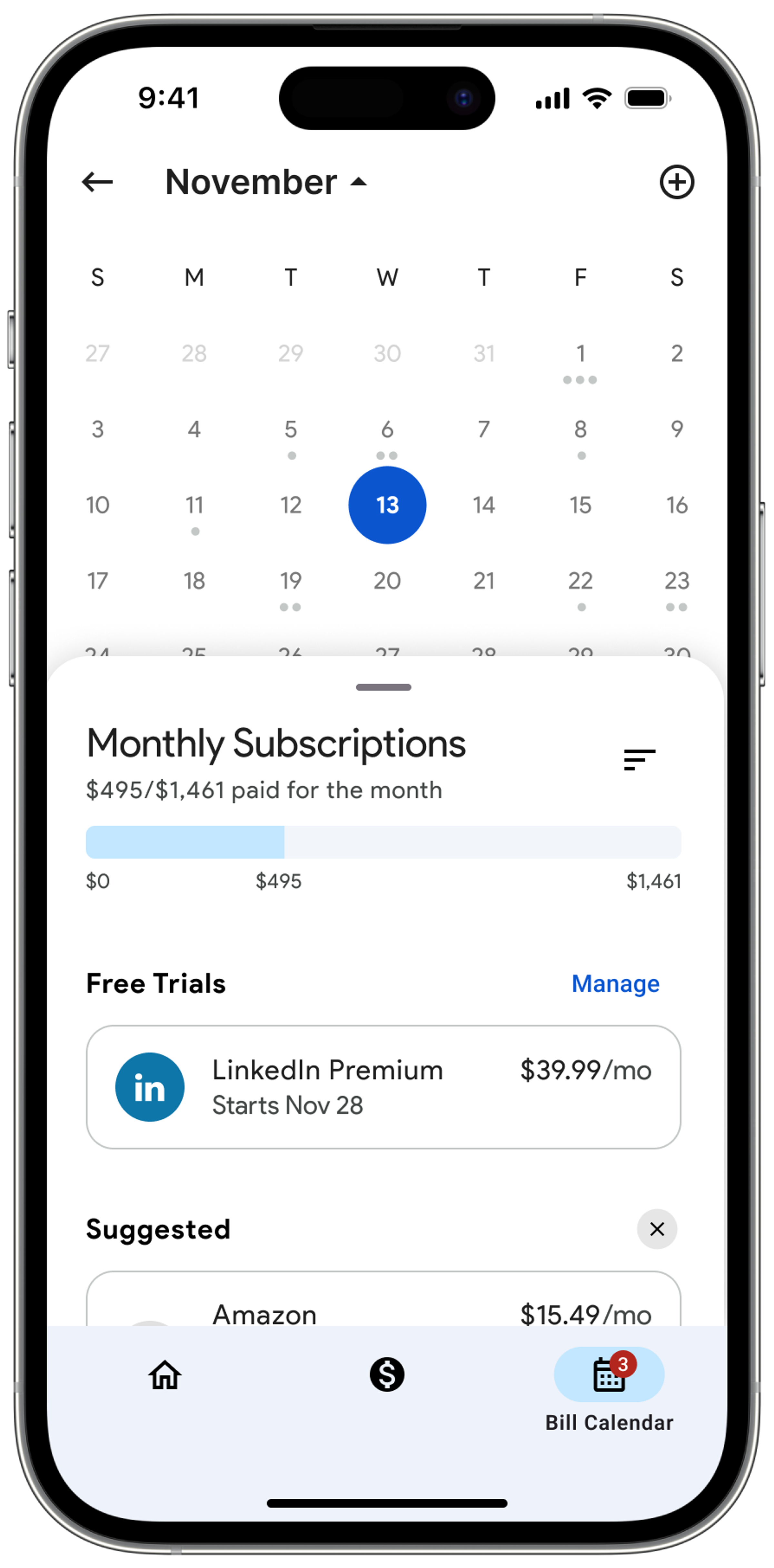
Upcoming Expenses, bills grouped into Free Trials, Suggested, Up Next, and Later
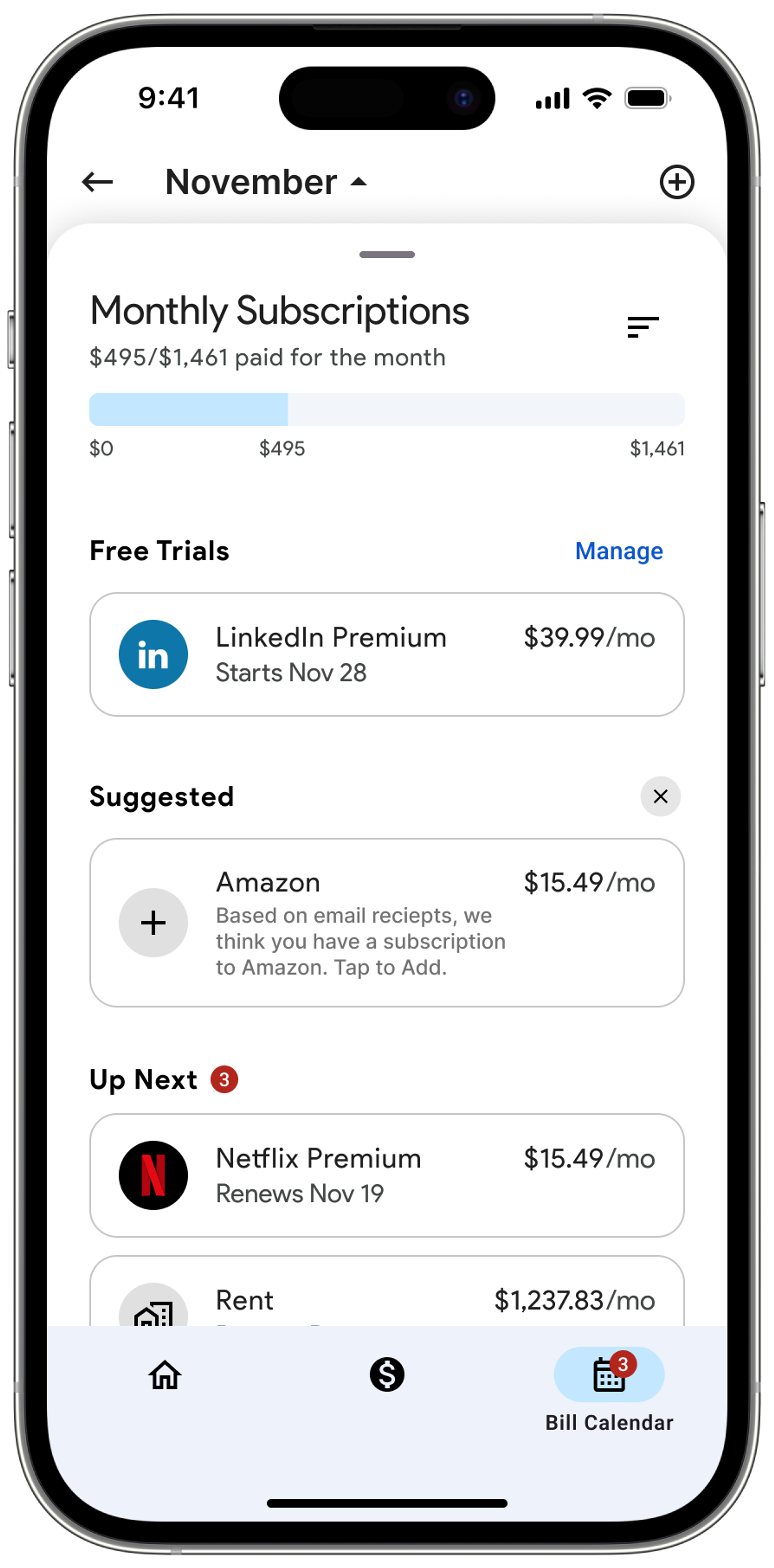
Expanded over the calendar
Insights Breakdown
A monthly price is small enough to ignore. The yearly and all-time totals are not. Setting a subscription against something a person already reads as a real cost, like what they spend on coffee, gives them a basis for judging whether it earns its place. This is where the challenge and justify behavior actually happens.
Insights Breakdown, Netflix cost compared against coffee spending over three months
The stakes
Figures from the Financial Health Network's U.S. Financial Health Pulse: 2020 Trends Report.
67%
of people in America are not financially healthy
21%
of 18 to 25 year-olds are financially healthy
15% / 24%
of Black and Latinx Americans are financially healthy, against 39% of White and Asian Americans
The research for a financial experience targeting 18 to 25-year-olds revealed that recurring, forgotten subscriptions are a major pain point. While the test group was 80% BIPOC, the study found that financial struggles with these expenses were tied directly to socioeconomic status rather than ethnicity, leading the design to focus on the financial situation rather than demographics.
In their words
From our initial research, we found people do not realize how much they are spending on recurring transactions, and they cannot tell whether a subscription is still worth keeping, so it renews unquestioned. The design had to make both the cost and the value of recurring expenses visible.
We explored three directions in the first round of testing.
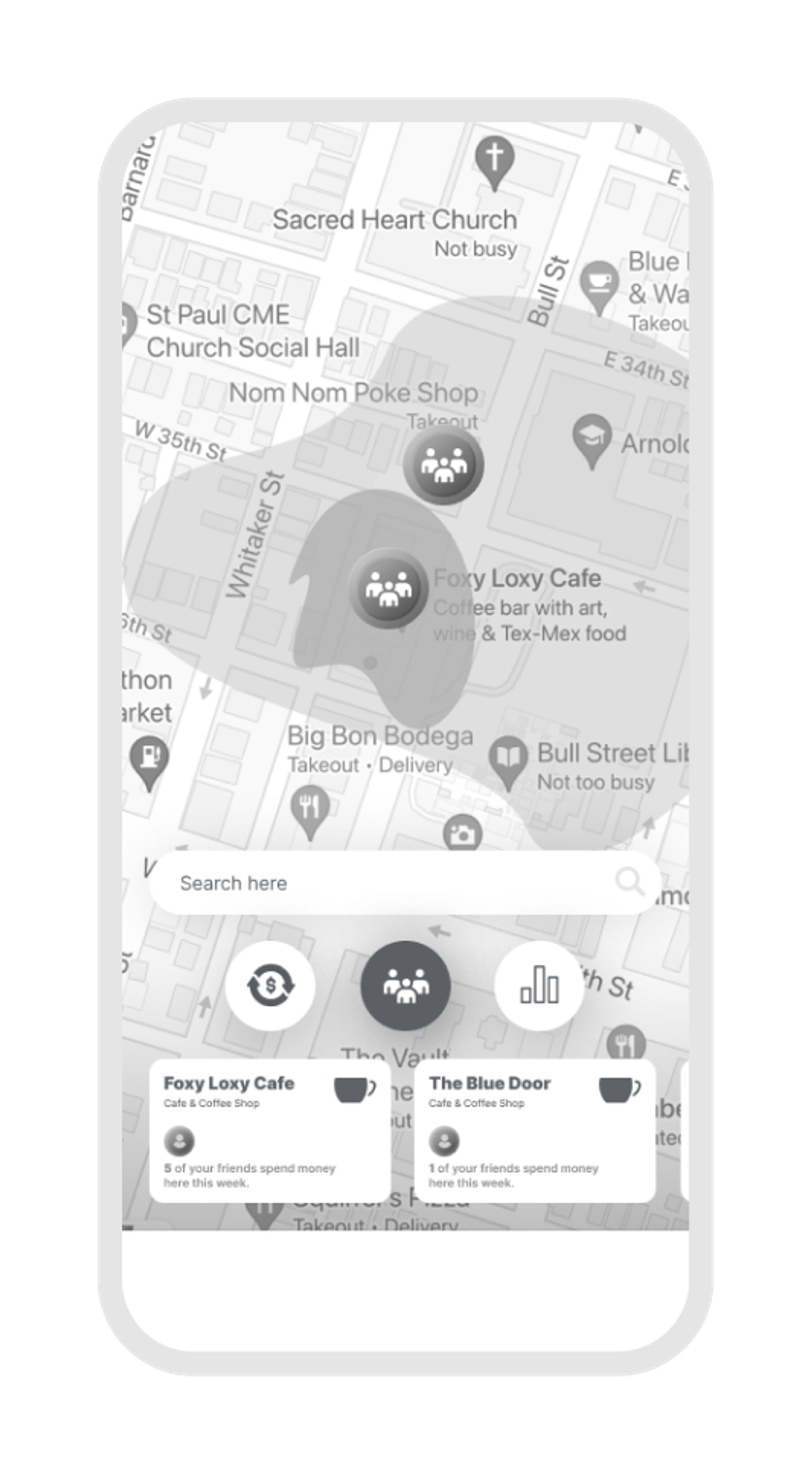
Money Stories Map: visualize transactions on a map to show people where their money goes.
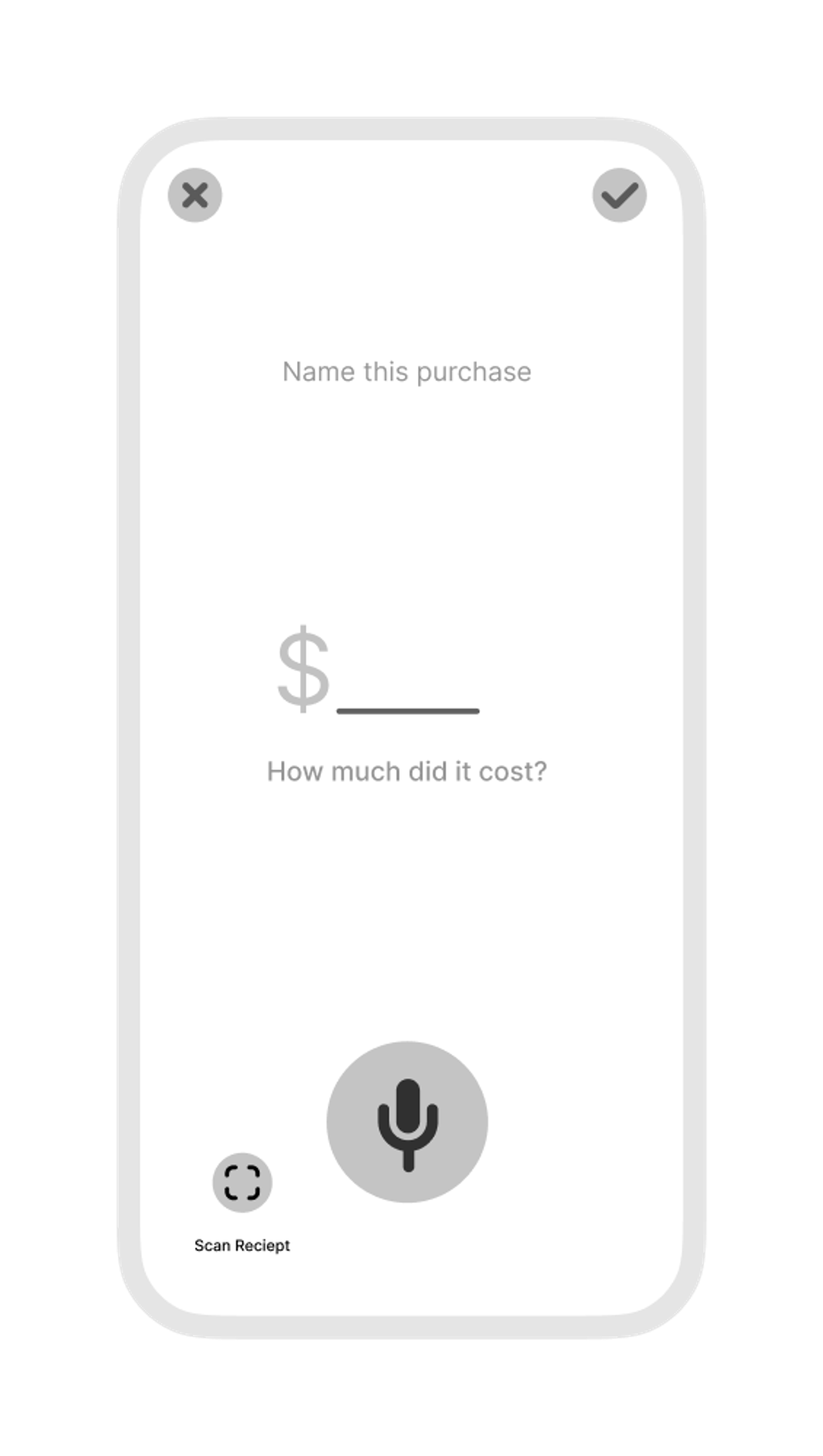
Transaction Logging: a three-tap way to log purchases that will not log themselves.
Savings Challenges: set a shared goal and compete with friends to save.
Our Transaction Logging concept tested well, but it overlapped heavily with another team's Money Stories Map. Leading the team, I made the call to hand that flow to the Map team and take us into a new concept the research kept pointing to: recurring bills and subscriptions. It became the Bills Calendar.
Assumptions going in
Out of sight
People don't take upcoming expenses into account when making purchasing decisions.
Challenge + Justify
If people are prompted to consider the utility of a transaction, they can manage it more effectively.
The long view
Understanding the long-term cost of a recurring expense helps people judge the value it gives them.
Changes after testing

Organize by category, not just date. People wanted subscriptions grouped, like streaming under Entertainment, each with its own total. I added a category view alongside the calendar's due-date view.

Predict expenses that vary. Utilities change month to month, which made them hard to plan for. Variable bills now show a predicted value from historical averages or the biller.

Rework 'Suggested'. People read the suggested-expenses feature as an ad nudging them to subscribe. I reframed it as recurring charges detected from their own activity.

Split with contacts. Adding a bill lets people set each person's share and contact details, so the app can handle payment outreach automatically. Testers saw strong utility here, so it stayed.
Assumption check-in
The calendar clicked
Every participant found the calendar view intuitive and valued the focus on due dates for planning ahead.
Free trial tracking
Tracking and canceling free trials before they convert was a standout, since people routinely forget them.
Comparison drove mindfulness
Comparing one expense against another pushed participants to challenge or justify each subscription.
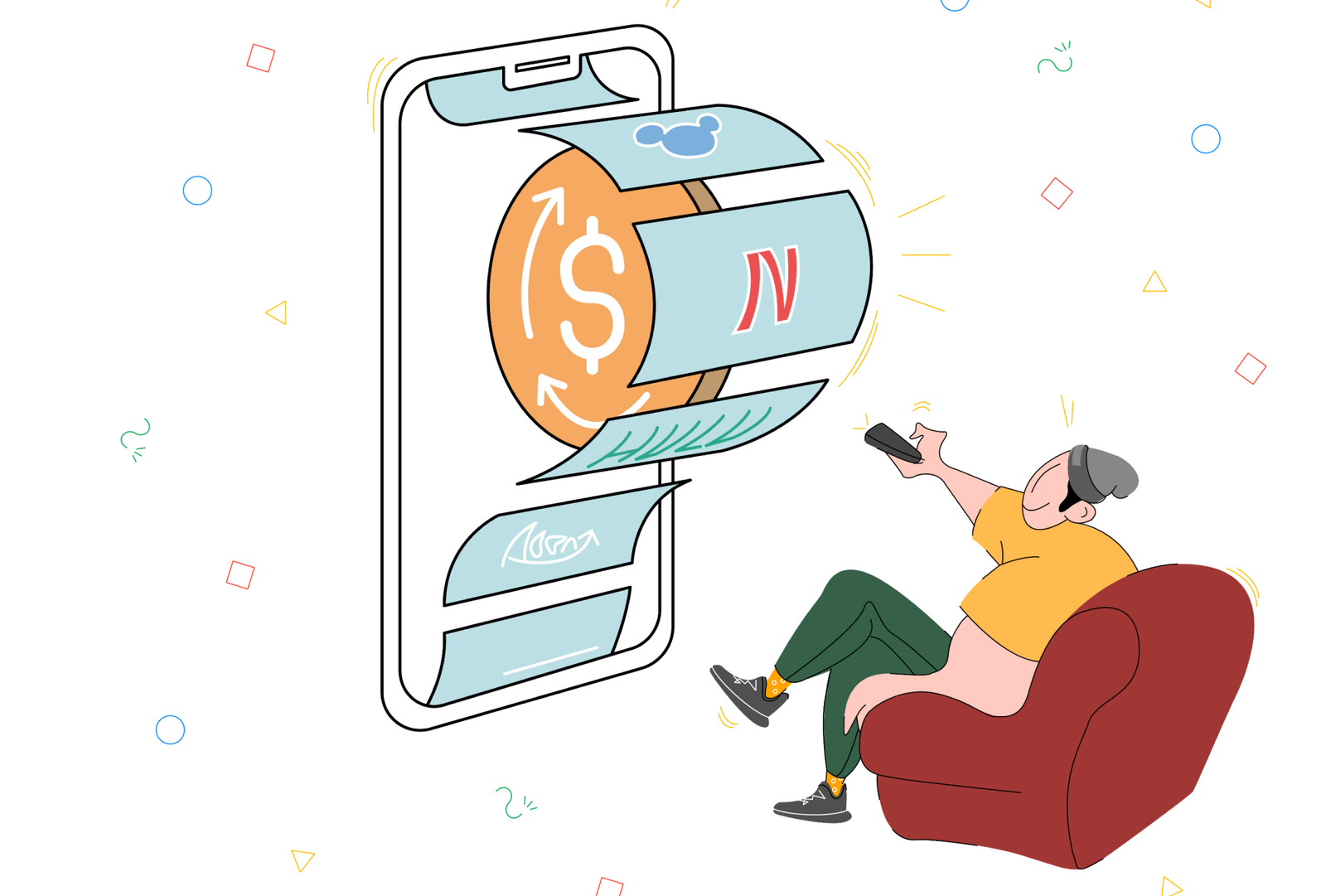
Last month, we signed up for a few different streaming subscriptions: Hulu, Netflix, and Disney+.
We had a lot of fun watching all the shows and films we could not have before. The vast content library on the three streaming services does make it difficult to consume everything we want.
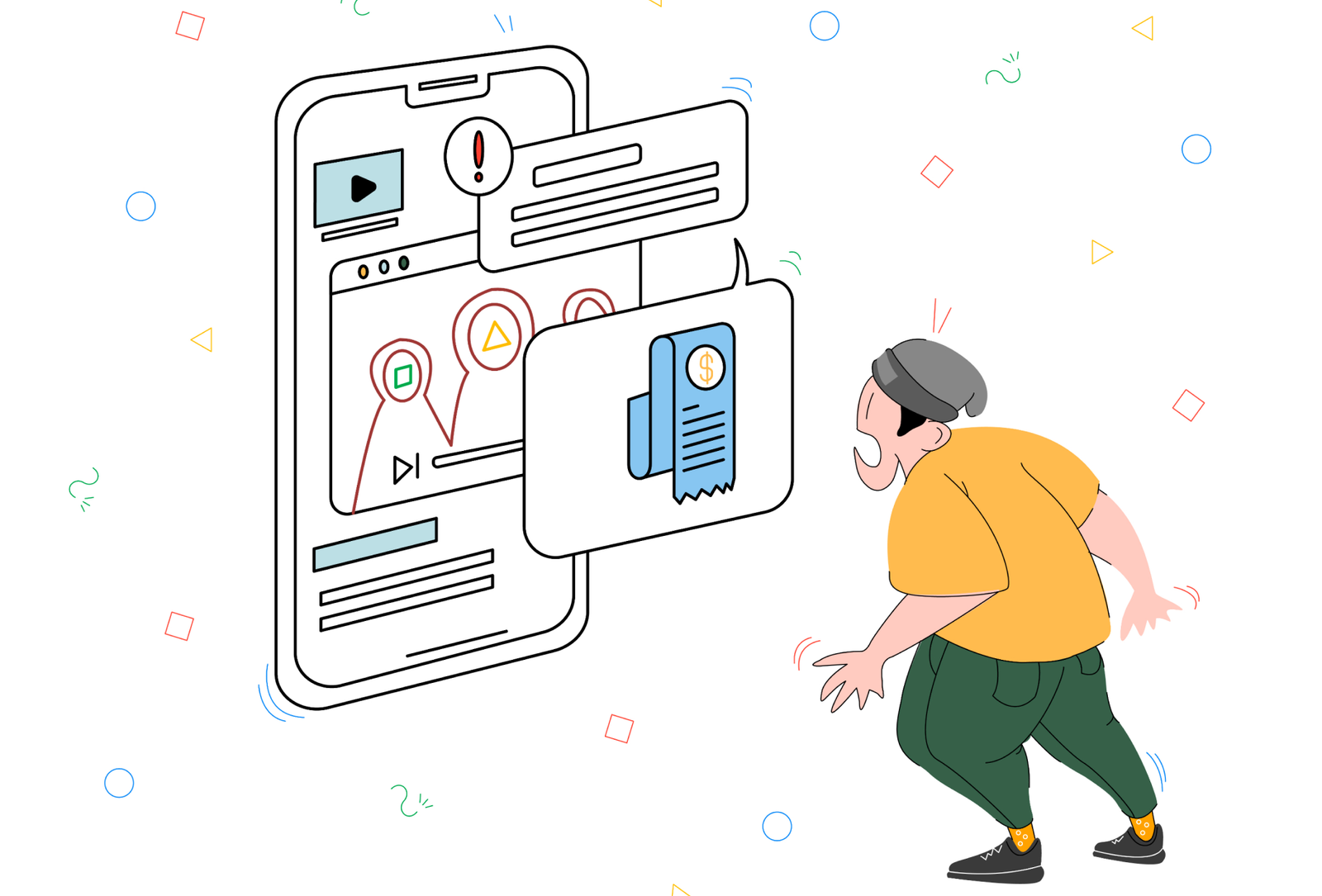
One night, as we were watching Squid Game, we get a notification that we might not be able to pay our rent next week.
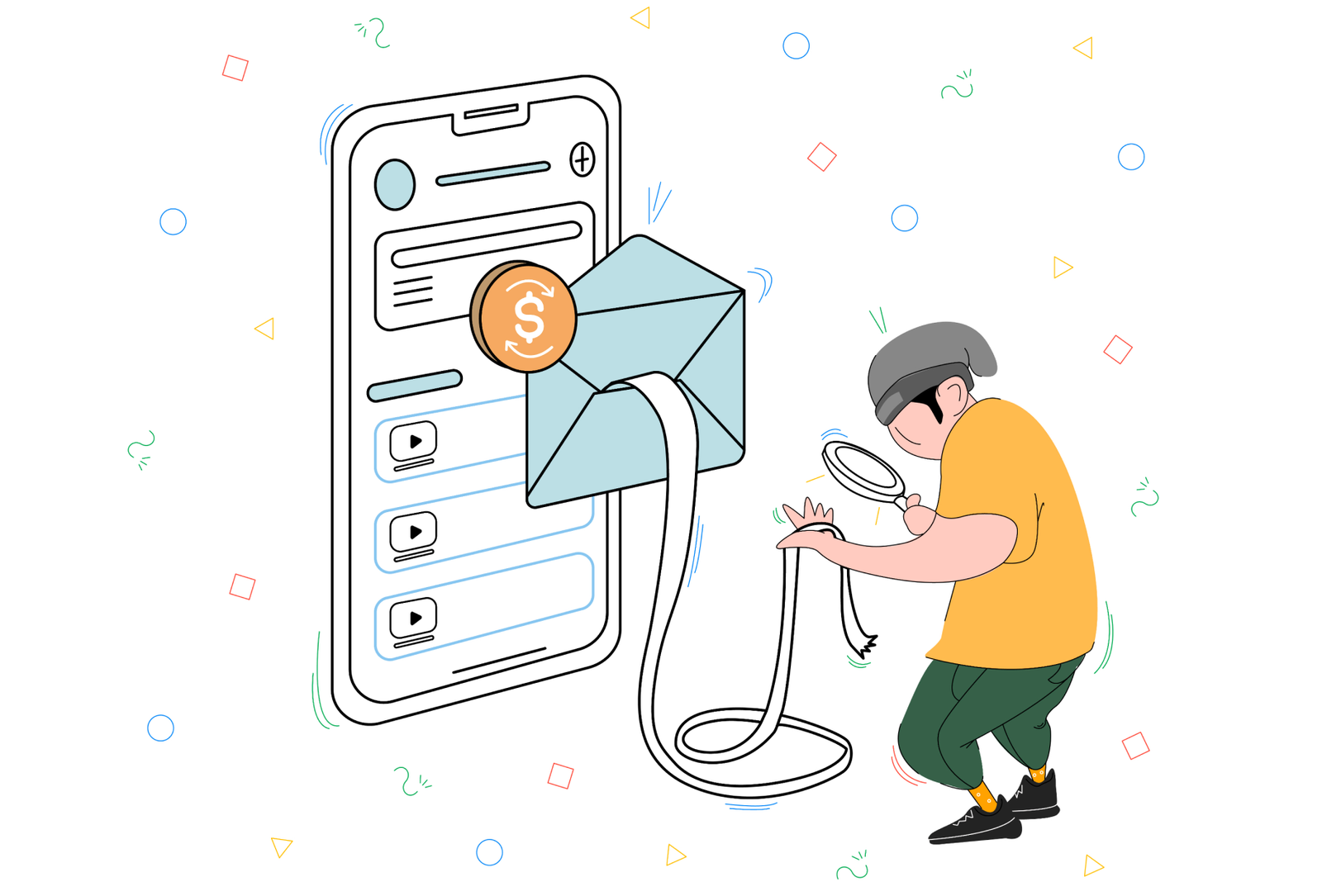
We look for expenses we can ease up on.
The three streaming services turn out to be over half of our subscription spending, which feels like too much.
The breakdown also shows the yearly cost, not just the monthly one.
Keeping both Hulu and Netflix would run over $100 a year each, which is hard to justify. We definitely don't need them all.

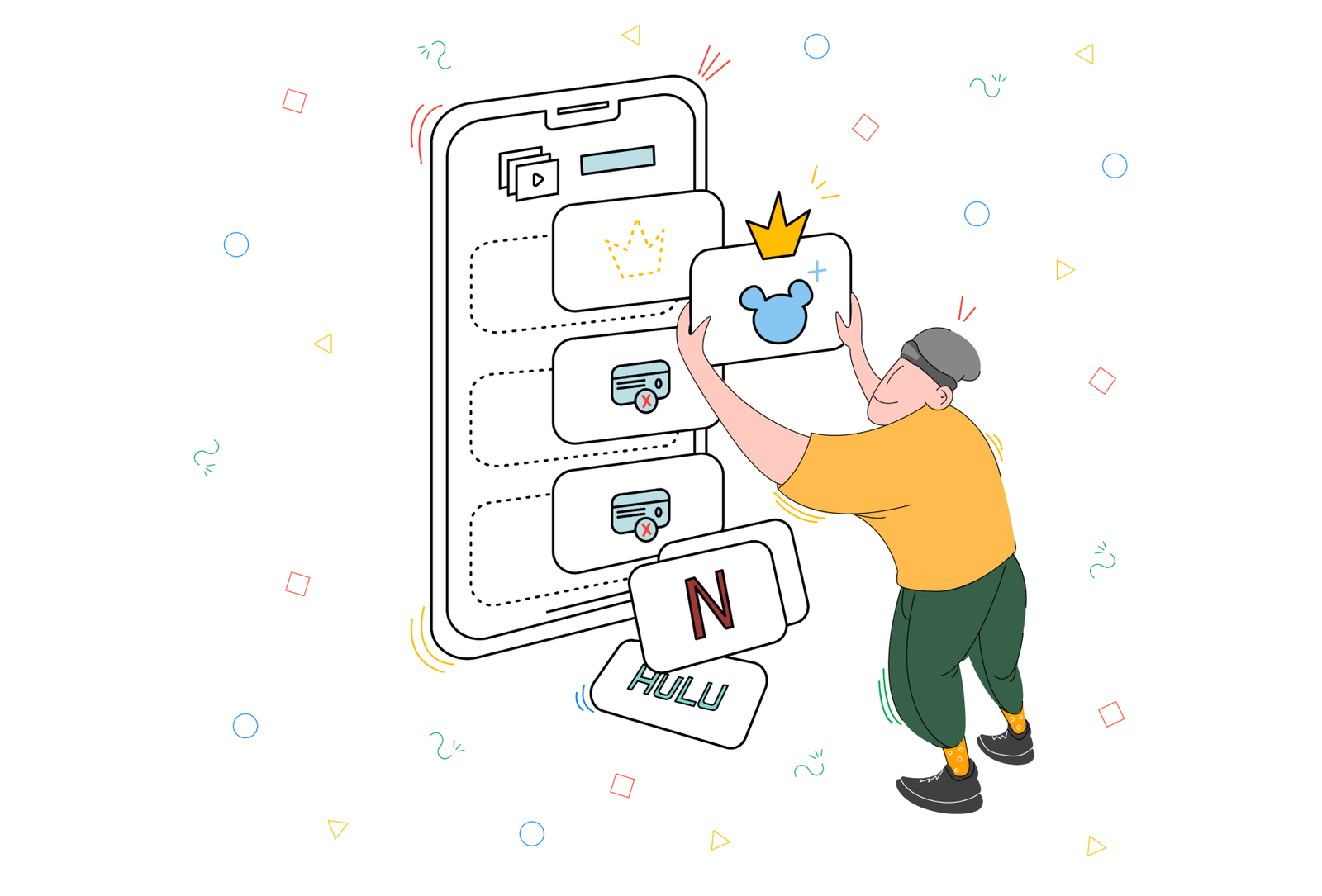
We hold on to Disney+ for its catalogue of classic films, Marvel, and Star Wars, and let the others go.
Having challenged and justified each one, canceling the subscriptions that were worth less becomes an easy call.

Google's team backed the work and said the Bills Calendar specifically was a direction they wanted to pursue. Google Pay shut down in the US a few years later, so the concept never shipped.
SUS score
89.7
the highest of the three final concepts
8
user testers
The calendar visual works
It organizes expenses clearly, and people want to sort them by both time and category.
Value is more than the monthly price
People rarely register the long-term cost of a subscription. Comparisons to their own discretionary spending made that cost feel real.
Variable and yearly bills are tough
Expenses that change each month, and yearly charges, still need a clear way to be shown and predicted.